A lesson of value from a simple mistake
Working with and getting familiar with a camera's functions is challenging, in a good way. Understanding how the exposure triangle- shutter speed, aperture, and ISO will affect the final results is encouraging and disheartening. Sometimes, depending on the results or the output (the photo image), it can be both. This is what it looks like through the photographer’s lens. The photographer will know whether the exposure they crafted created or captured the image they intended. The audience (the viewer) will either like it or not. The street photographer is not crafting images for the viewer or the masses. A single image can be liked by some and disliked by others. Well, you can’t please everyone. Now, if someone is paying or has commissioned the photographer to perform a specific task or job- weddings, birthdays, anniversaries, etc.- then, of course, the effort expended is to produce an acceptable output for that audience.
How do the previous statements relate to the topic of this article? Since I've started on this journey of street photography, I've learned a whole lot in a short period of time within three months, let's say, from June 2026 until just recently, September 2026.
I've been going out every day, taking photos; squeezing the shutter release has a certain tactile sensation. It’s cerebral in different scenarios, scenes, and settings. From June to August, I would commute to downtown Chicago from Waukegan twice a week to capture the street scene: buildings, structures, riverwalk activities, and the homeless. I initially chose downtown Chicago because of the activity level, the tall buildings, and the volume of people visiting Chicago during the summer months. I don’t live far from the Waukegan Metra commuter train line that goes into downtown Chicago. I didn't need to drive in heavy traffic or pay for expensive downtown parking. I was able to get my walking steps in on each outing and come home with a wealth of photos, some good, some not so good. But I was not discouraged. The hobby was new to me. The camera was new to me. Street photography was new to me. I was learning photo editing software.
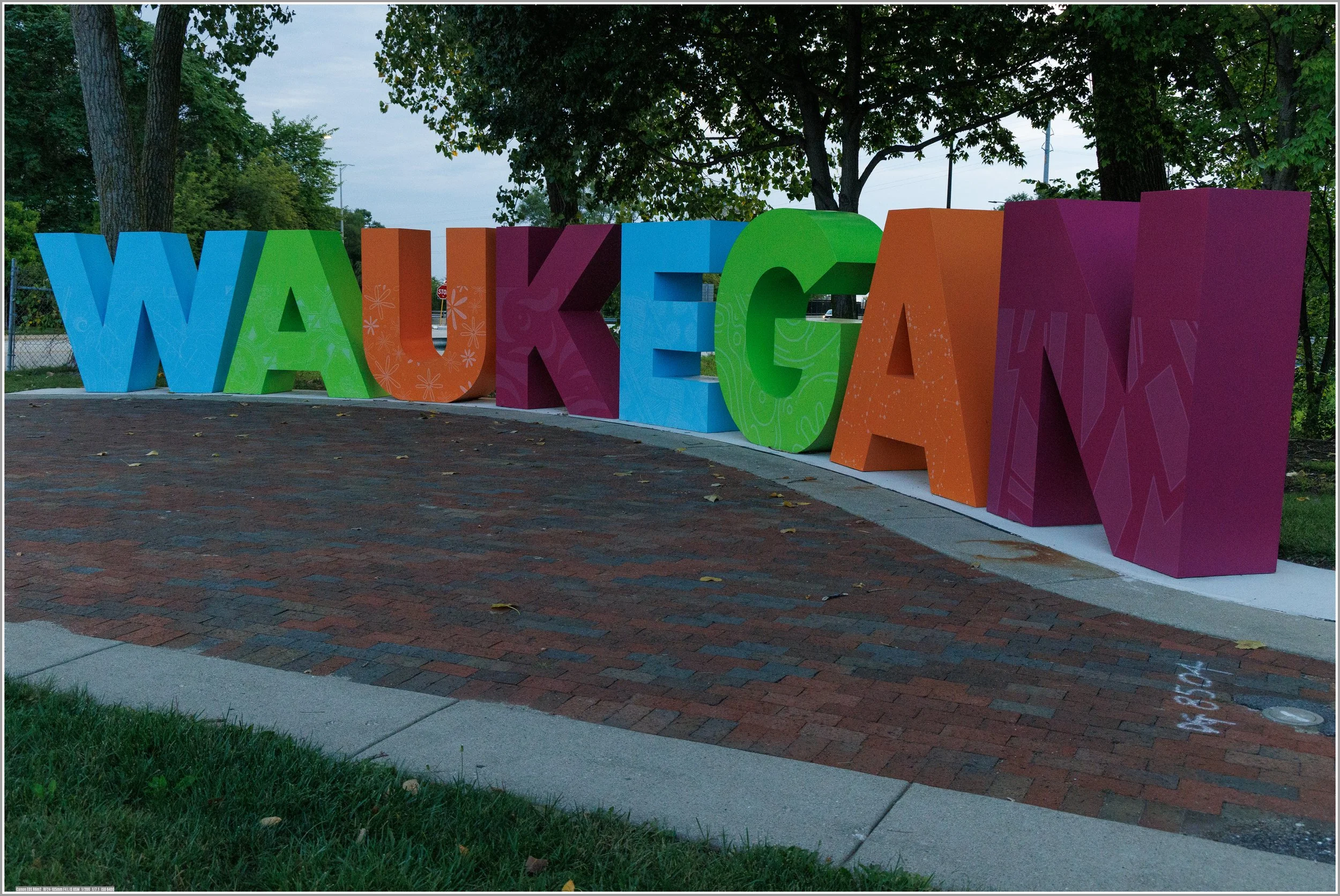
I decided to change things up in August by staying local and finding interesting photographic scenarios in my community. A more experienced photographer I found online encouraged me to do so, and I started taking my camera on walks around my neighborhood. That turned into short drives within Waukegan, where I found photo opportunities in other neighborhoods. To my surprise, I learned more about Waukegan than I had before. Huh …
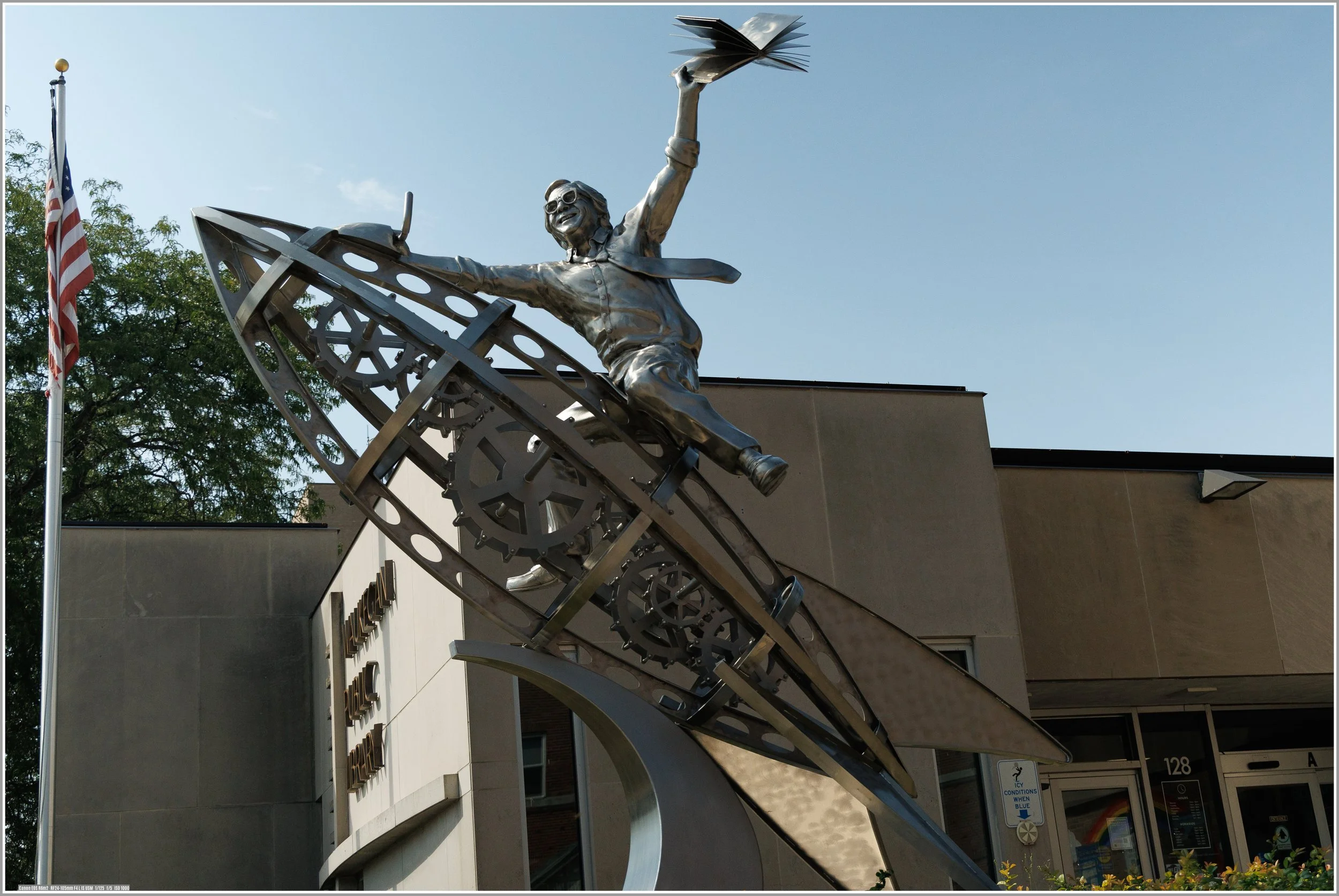
Ray Bradbury was born and raised in Waukegan, Illinois. He is known for sci-fi novels: The Martian Chronicles (1950), The Illustrated Man (1951), Fahrenheit 451 (1953), which in 2018 became an HBO high-tech film starring Michael B. Jordan and Michael Shannon, and Something Wicked This Way Comes (1962)
The Waukegan Public Library dedicated a statue to Ray Bradbury
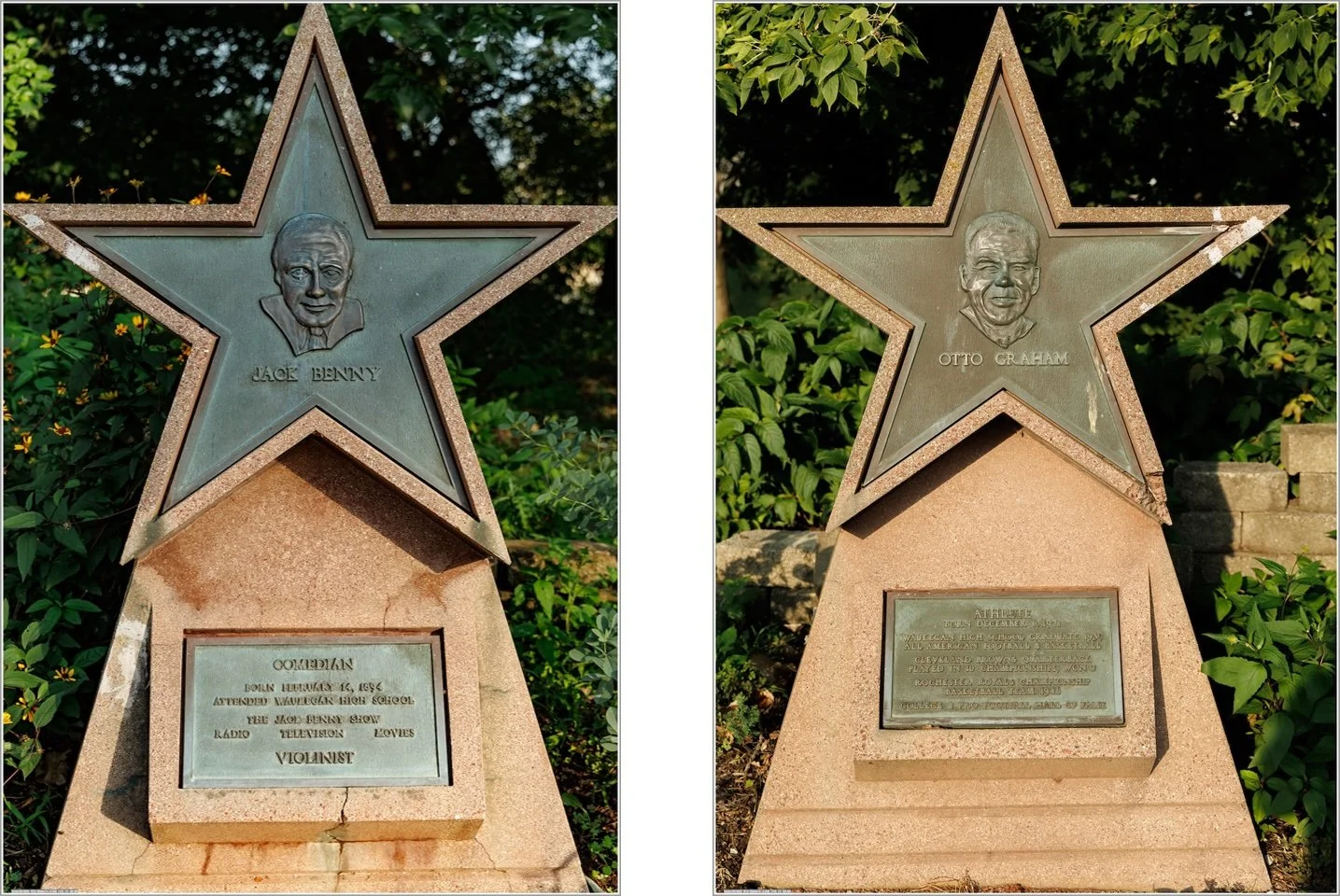
Two other famous Waukegan residents from the Golden Era, before television.
Jack Benny was a comedian and violinist who began his career on the radio and later on television. He was born in Chicago. His family moved to Waukegan and raised him there.
Otto Graham is widely regarded as one of the greatest quarterbacks in football history. Played for the Cleveland Browns from 1946 to 1955. Graham was born and raised in Waukegan. Attended Waukegan High School (Go Bulldogs), was a standout in basketball, baseball, and football, and a graduate of Northwestern University.
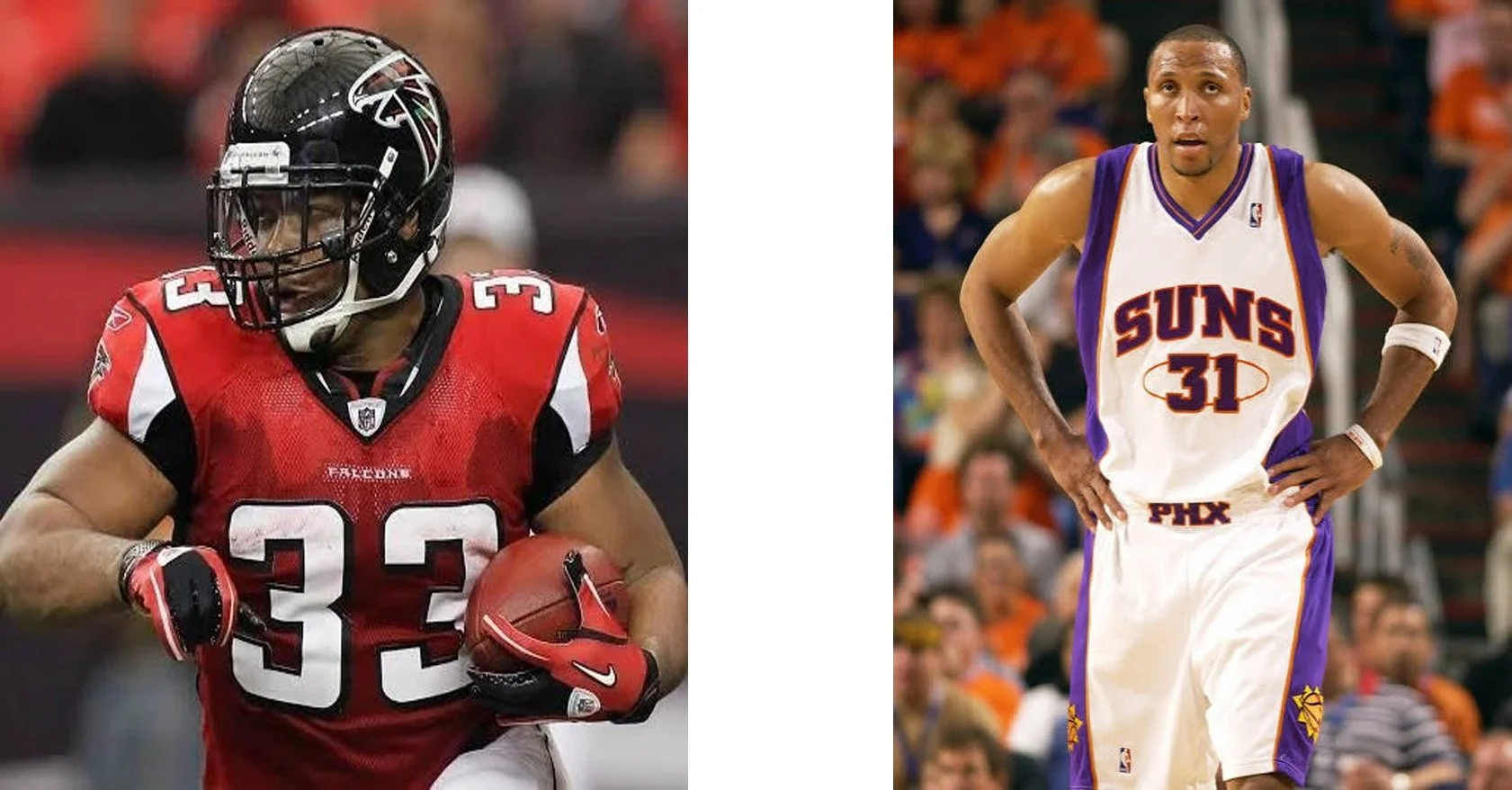
Michael Turner, born in Waukegan and a Waukegan High School star, is an American former professional football player and National Football League running back. He played college football for the Northern Illinois Huskies and earned second-team All-American honors in 2003.
Shawn Dwayne Marion, born in Waukegan, is an American former professional basketball player who played 16 seasons in the NBA. He finished his career as a four-time NBA All-Star, a two-time All-NBA Team member, and a one-time NBA champion, helping the Dallas Mavericks win their first title in 2011. Whatever it is, the way you tell your story online can make all the difference.
Recently, in August, I attended a couple of outdoor music and food festivals. One was a Jamaican music and food festival celebrating Caribbean culture. The other was a stepper set; everyone wore all white, and it was held at the marina near Waukegan Harbor. So all of us old-timers, old-school people, mostly baby boomers, were partying, conversing, snacking, and sipping. They were stepping and line dancing.
I took a lot of photos at the Jamaican Music and Food Festival and the next day at the Steppers Set. The next day I decided to upload the photos into Lightroom Classic. After setting up folders on the storage drive, I uploaded the photos to their respective folders. I opened the folder in Lightroom Classic with photos from the Jamaican Music and Food Festival and found that 90% of them were completely blown out. They were either underexposed or overexposed. Somehow, the camera settings changed, and I wasn't aware of it. During the music and food fest, I reviewed a few photos in the beginning. However, I did not check or review my settings after taking a series of photos. The photos I took in sunlight were 98% white, and the photos I took in shaded areas were black with a hint or a speck of grayish light.
My first instinct was to panic. I called myself a lot of stupid names. I panicked, thinking something was wrong with the camera. I called myself more stupid names.
Then I looked at the photos from the Steppers Set. Only a few photos had over/underexposure issues. Again, with the stupid name-calling…
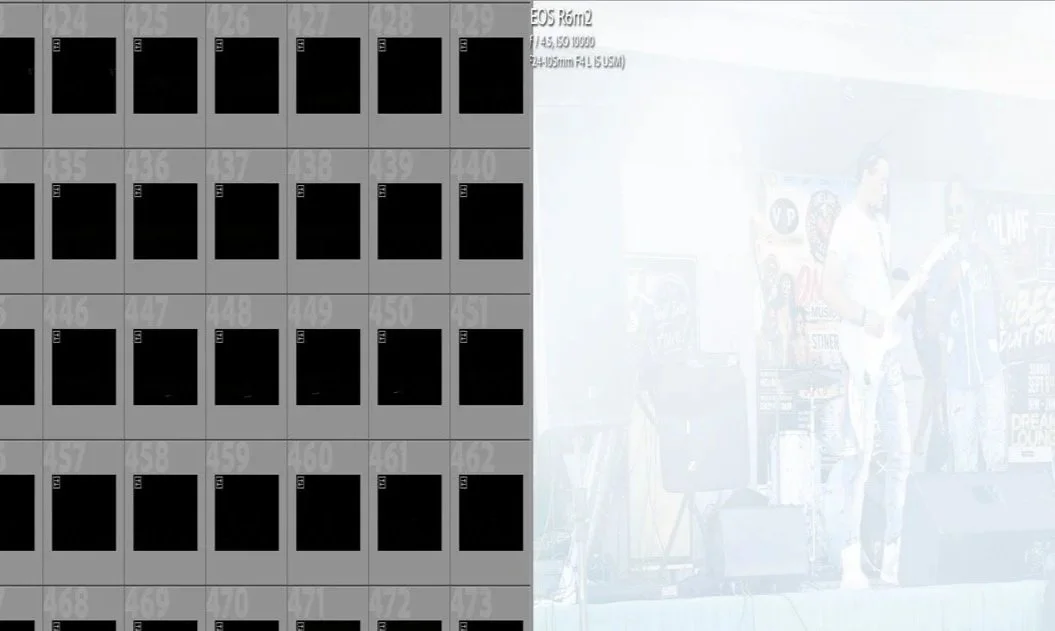
I went to ChatGPT, or whatever the AI tool that Google has is, and posted a statement of my situation and asked if there was a resolution: could these photos be salvaged? Needless to say, ChatGPT came back with responses that said I could salvage all my photos. The AI tool provided instructions for each exposure scenario, with all the adjustments to make in Lightroom.
Since all my photos are in RAW format, the AI tool gave me several suggestions for working with those particular photos in Lightroom. It recommended specific adjustments and even suggested converting some images to black and white.
From that, I was able to post some images to Facebook, Instagram, and my website.
With that experience, I learned a valuable lesson. Well, a number of valuable lessons.
The first—and probably the most important—is to always check your camera settings before squeezing the shutter
The second—and probably the most important - is to always check the ISO and Shutter Speed settings, either on the LCD or in the viewfinder, before squeezing the shutter
The third—probably the most important—is to always check and review the photos on the LCD screen after taking a series of photos
I didn't do that. I didn't do that. I didn't do that.
That experience became one of many little lessons we don't necessarily learn by watching YouTube Videos or tutorials. We learn by actually being out there taking photos, reviewing the settings, and analyzing the results in real time, and then realizing, Okay... something's not right here; let me make an adjustment.
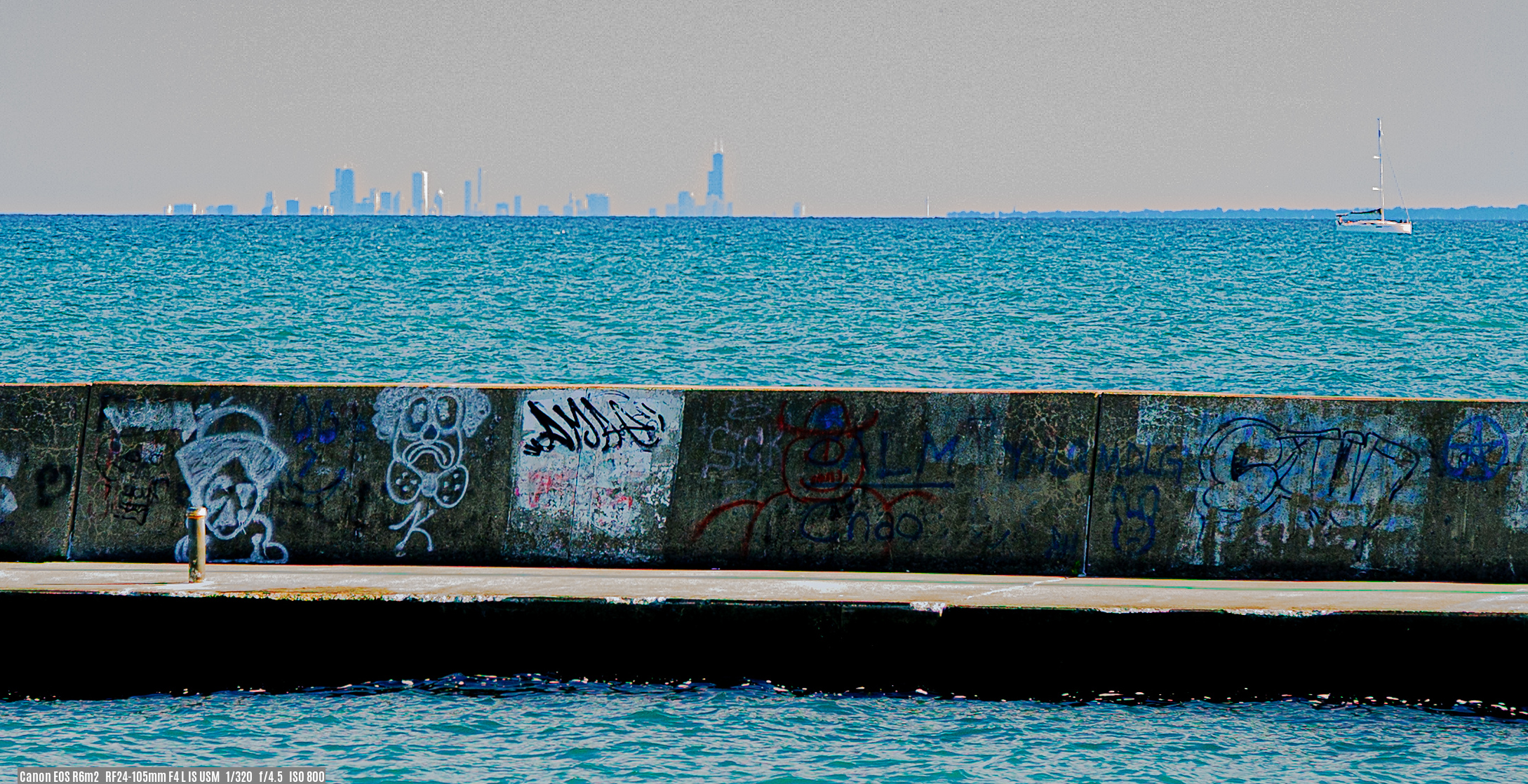
I want to share this photo of the downtown Chicago Skyline taken from Waukegan Lakefront’s Stiner Pavilion. Waukegan Lakefront is 43 miles north of Chicago’s downtown steel-and-glass-and-concrete skyscraper giants. The air quality was clean; there was no haze, the sky was relatively clear, and we did not experience any smoke from the Canadian wildfires as we had in previous months.
I
could see the images clearly. On the right is the Willis Tower, formerly Sears Tower. Almost directly in the center is the thin column of Trump Tower, and on the left, the black blob is the John Hancock Building. Navy Pier stretches out into Lake Michigan.
Chicago Steel and Glass Skyscraper Giants
Before I go, I’m learning something in photography that I can relate to as an analogy in Jazz Music. I think Miles Davis said, “There are no wrong notes in jazz; only notes in the wrong places.” “It’s not the note you play that’s the wrong note - it’s the note you play afterward that makes it right or wrong.”
I’ve come to realize there may be no bad photos or shots. What I do to edit the photo makes it good or bad.
The only person who knows whether a photograph turned out as intended is the photographer—and in this case, that's me. The person viewing the image is simply looking at what is in front of them. They don't know what I was trying to capture. They don't know what settings I used or what I expected the final image to look like. They are looking at what I present. They'll either like it or not.
Oh, I don’t like liver …